Achievement Unlocked: Passive House Certification
Early last year I wrote in two posts about my goal to become a Passive House certified professional, and how the events of life - (ahem- starting a firm!)- had gotten in the way of that. Well, I’m proud to say that I’ve achieved that goal in 2026!
Passive House (or Passive Haus as it’s known internationally) is a building standard that was created in Germany in the 1990s in recognition to the fact that a huge amount of the energy that humans use is in the day-to-day operation of buildings and that creating more energy efficient buildings would have significant effect on global energy usage and climate change. Then as now it was understood that creating a very very well insulated wall and roof is the best way to lower the amount of energy a building uses. Think of it like having a hot cup of coffee on a cold day, if you want it to stay hot you put it in a well insulated cup with a secure top, but if you take the top off and pour it into a thin walled paper cup with no lid you’ll have iced coffee before you know it (which for many New Englanders is what they’re after anyways, but I digress).
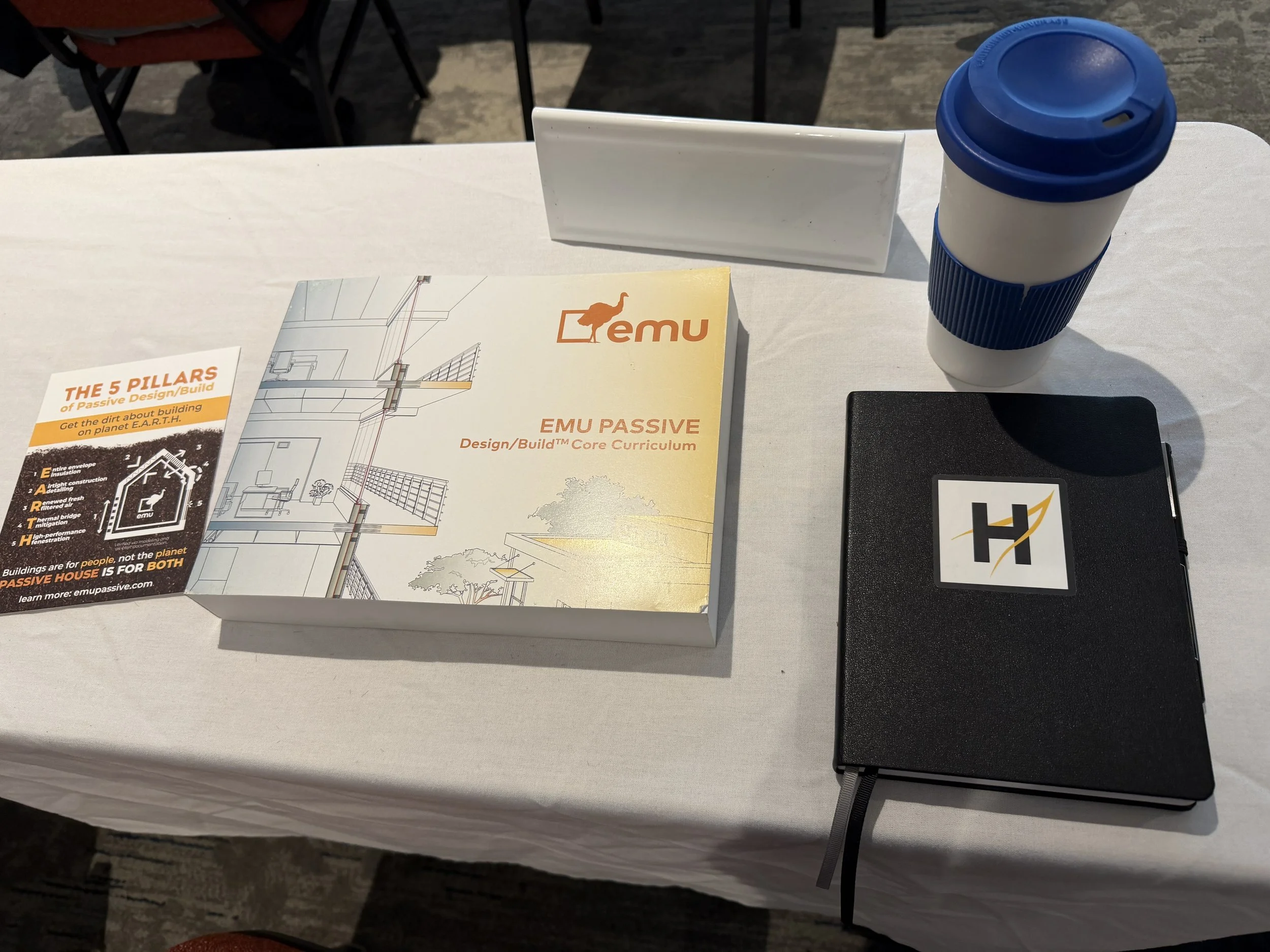
Passive House Study Material, with coffee cup visual aid.
If it was just as simple as building thick walls Passive House probably would never have been invented, but the field of building science identified several potential problems with thick walls full of insulation, the main one being that moisture laden air created by the humans in the building will move through the wall and slowly lose temperature, eventually getting to the walls dew point, which means the air can’t hold the moisture anymore and so the wall starts getting wet. Many of you know that water loose inside a wall or roof cavity can cause serious problems for not just the structure (rotting wood) but also the inhabitants of the building if conditions are right for mold to form. So Passive House requires that buildings be designed and built with barriers that will keep moist air from reaching the point where they can condense. Much of the work in training was about creating an air barrier and following it through all of the gaps and crevasses that buildings have.
At this point we have designed a building that is a very good insulator and is airtight, which is great from a purely engineering standpoint, but it’s actually not great for the people living in it. Why? The air is trapped in the room with them, yes, you can open windows and doors to let in fresh air (this is encouraged in Passive House and by me personally), but that’s not something that can be done year-round in most climates. So, Passive House requires a system for bringing in fresh air in from the outside and for moving stale interior air out. These systems employ filters that keep unwanted material out of the building like pollen, air pollution from nearby road traffic as well as smoke from wildfires if there happened to be any around and they also exchange heat and humidity so that we aren’t dumping hot air to the outside in the winter and then using more energy to heat up the incoming very cold air.
And that’s the gist of the system: Insulate your envelope (walls, floors, roofs, windows and doors), control moisture by controlling air, provide fresh air to the building inhabitants while using less than 4.5 kBTU/SF*year for heating, which is far below what the average house uses and is much less than what the building code prescribes.
The very smart thing about Passive House is that it does not dictate how the goals are met, you can use any material, any equipment and any assembly to achieve the performance goal, and all of it verified by a third party that is certified by Passive House. In all honesty, under typical building codes a builder or designer can fill out paperwork saying that their building has a certain level of insulation, but there are very few municipalities in the country that actually verify that the correct insulation has been installed – or that it has been installed correctly. Passive House requires a thorough review of the actual performance of the building before rating and certifying it, and this is something that I very much like about this system.
On top of all that, Passive House buildings are very very comfortable for those using them. The walls are well insulated so that noise from outside does not come in, and the HVAC equipment is able to be correctly sized so that fans or blowers can run at lower speeds so that they are much less likely to be noticeable background noise. In fact, the building can hold heat (or cooling) so well that there is a lot more time between cycles, which means fewer times being distracted by a fan spinning up.
I’m excited about what I’ve learned in the class and very much want to put it to use in my practice, but I recognize that the Passive House system isn’t practical on most of the projects that we do. For one thing we are rarely asked to do new construction (but we’d never say no to it!) and the majority of our addition/renovation projects don’t have the budget for a full Passive House treatment and many of them might not have the space for them! Walls on Passive House projects generally exceed 12” in thickness and it can be tough to manage that as an addition to an existing house on a small piece of land in New England.
So why take the time (and money) away from the practice to get this certification when I know it may not get used? I can think of three reasons right now. The first is that even in the United States building codes are moving this direction and having this training puts me in a better place for it. Secondly, the training is rooted in good building science which can be applied to any kind of project, so even if I do a project that doesn’t meet PH standards, it’s still going to use much less energy than if we had just stayed with code minimums. Thirdly, I just feel that using less energy is the right thing in just about any situation. I’m always turning down the thermostat, putting on a sweater in the winter, and making sure the kids haven‘t left lights on in rooms they aren’t in anymore. I’m not virtue signaling and I know I can do more, but I feel that everyone should do what they can with what resources they have whenever they can. For me, right now, that means designing and advocating for more energy efficient and comfortable buildings.
So, with all that said, does anyone want to build a Passive House? I’m game.